


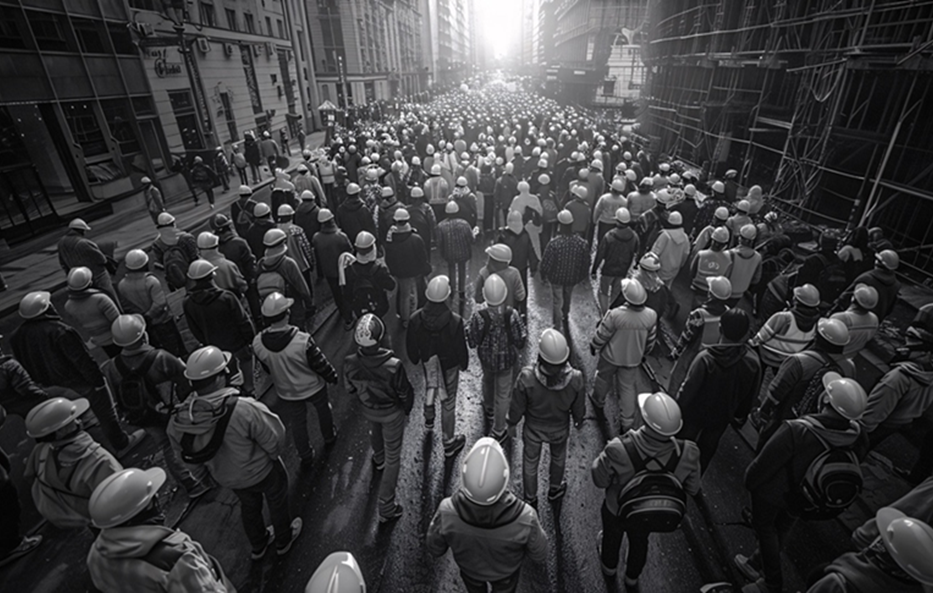
As we move through May—a period often associated with Labour Day reflections, it is worth examining how India’s workforce is evolving, particularly in labour-intensive sectors like textiles.
India remains one of the youngest economies globally, with over 65% of its population below 35 years. Each year, an estimated 8–12 million people enter the workforce, placing continuous pressure on job creation and workforce absorption.
Over the past two decades, India has seen strong growth across manufacturing, trade, and services, supported by improved education levels and economic reforms. This has significantly broadened employment opportunities, giving workers more choice than ever before. Historically, agriculture (42–45% of employment) and textiles (45 million direct and 55–60 million indirect jobs) have been key employment generators, especially for rural and semi-skilled workers. While agriculture remains widely distributed, the textile sector has evolved into a cluster-driven, MSME-led ecosystem across emerging cities and towns.
However, both sectors are now experiencing labour shortages and rising attrition . Government initiatives such as Stand-Up India, Mudra Yojana, and expanded MSME credit access have accelerated entrepreneurship and self-employment . While positive for economic diversification, this has also reduced the steady labour pool traditionally available to sectors like textiles.
At the same time, the rising cost of living in industrial centres is influencing worker mobility and retention. Migration decisions are no longer based solely on wages—workers increasingly evaluate housing, transport, working conditions, and overall quality of life . This has contributed to a shift of textile operations from legacy hubs like Ahmedabad and Mumbai toward cost-efficient clusters such as Bhilwara, Surat, Panipat, and Tirupur .
Migration patterns themselves are evolving. Improved regional development, infrastructure, and connectivity are reducing long-distance migration, giving workers greater flexibility—and in many cases, stronger bargaining power.
A clear structural shift is underway. Today’s workforce increasingly prioritises:
- Income stability over variability
- Safer and more comfortable working conditions
- Proximity to home
- Opportunities for skill development and growth
Younger workers, in particular, are less inclined toward physically intensive roles with limited upward mobility, especially when alternatives exist in retail, logistics, and gig-based services. Another important dimension is female workforce participation. While women have historically played a significant role in agriculture, participation in textiles remains region-specific relatively high in southern clusters such as Tamil Nadu, but lower in many northern and western regions. This highlights a clear opportunity for more inclusive hiring practices supported by appropriate workplace policies .
Skill levels across the industry remain uneven, with a large proportion of semi-skilled labour. This underscores the need for structured training, upskilling initiatives, and better worker support systems to improve productivity and retention. While large-scale automation remains limited in cost-sensitive textile segments, selective automation and process improvements are becoming increasingly important not just for productivity, but also for reducing labour dependency and improving consistency and working conditions .
Climate is also emerging as a hindering operational constraint. In hubs like Surat , which rely heavily on migrant labour from states such as Uttar Pradesh and Bihar, productivity is often impacted during peak summer months (April–June) due to:
- High shop-floor temperatures (commonly 40–45°C, higher in non-cooled environments)
- School holidays prompting temporary reverse migration
- Agricultural cycles requiring labour support in home regions
When combined with market volatility, these seasonal disruptions of almost a quarter of a year, makes operational efficiency highly significant.### The Bottom Line India’s textile workforce challenge is no longer just about labour availability—it is about alignment with evolving worker expectations .
The organisations that will lead going forward will be those that adapt faster—by rethinking wages, working conditions, skill development, and productivity systems —while making textile jobs more sustainable and aspirational.